Saw palmetto vs finasteride: what the evidence actually shows
Saw palmetto and finasteride aim at the same target. Both slow 5 alpha reductase, the enzyme that turns testosterone into DHT, the hormone behind pattern hair loss. The honest difference is strength. Finasteride is a prescription medicine with the stronger evidence behind it. Saw palmetto is a botanical with a gentler, and smaller, effect. Here is how they actually compare, without the marketing on either side.
The same target: what DHT has to do with it
Pattern hair loss is driven largely by DHT (dihydrotestosterone), a potent form of testosterone. In people who are sensitive to it, DHT gradually shrinks the hair follicle in a process called miniaturisation, so each hair grows back finer and shorter until it eventually stops. Both finasteride and saw palmetto work a step upstream of that, by reducing how much testosterone is converted into DHT in the first place. Less DHT reaching the follicle means less pressure on it to shrink.
Where they part ways
Finasteride is a prescription tablet. It selectively blocks the type II form of 5 alpha reductase, and the evidence behind it is substantial and consistent. It is one of the most studied hair loss treatments there is. Saw palmetto, or Serenoa repens, is a plant extract available without a prescription, whose fatty acids and a compound called beta sitosterol block both forms of the enzyme, though less powerfully. It has been used for years for prostate symptoms, which share the same DHT biology, and that is where the interest in it for hair began.
What the research actually shows
For finasteride, a 2022 network meta analysis in JAMA Dermatology ranked the main hair loss treatments and placed the 5 alpha reductase tablets among the most effective options for male pattern hair loss. For saw palmetto the picture is more mixed. A 2020 systematic review in Skin Appendage Disorders pooled the available studies and found saw palmetto improved overall hair quality in around 60 percent of people and increased hair density in a majority, and that it was well tolerated. But the same review was candid that the underlying studies are small and low in quality, and that most saw palmetto products tested also contained other ingredients, which makes it hard to know how much of the benefit was the saw palmetto itself. There is even a topical study, published in an Australian dermatology journal in 2016, in which men using a topical saw palmetto product saw their hair count rise over 24 weeks, though it had no placebo group to compare against.
Head to head, which one wins?
Only one study has put them directly against each other. Over two years, men taking finasteride did better than men taking saw palmetto. Around 68 percent of the finasteride group saw increased hair density, compared with around 38 percent on saw palmetto. So on the current evidence, finasteride is the more effective of the two. That is the honest headline, and any product that tells you a botanical matches or beats the medicine is getting ahead of what the research supports.
Start with a scan and an honest conversation
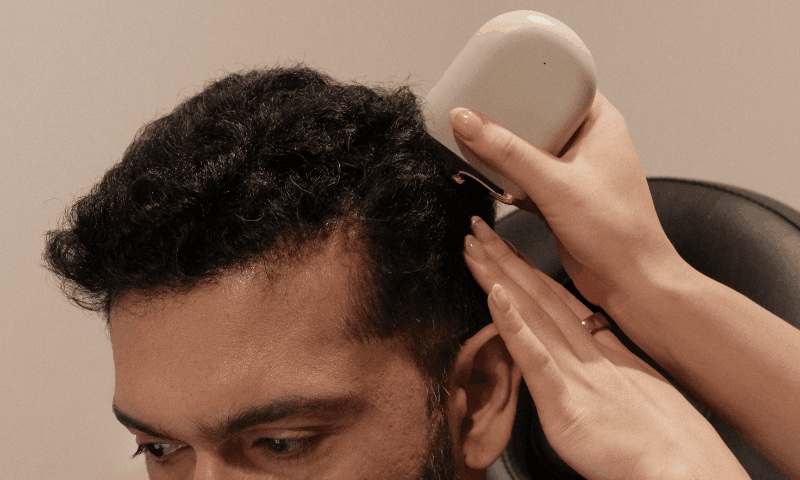
We do not prescribe medication, but we can map your scalp, explain your options clearly, and point you to the right person where medication is worth considering. The consultation and scan are complimentary.
Book a complimentary consultationSo which is right for you?
It depends on what you are willing to take, and that is a conversation for a doctor, not a website. Finasteride is the stronger option for people who can take it and are comfortable with a daily medicine, though like any medicine it has considerations worth discussing with a prescriber. Saw palmetto is a gentler, lower commitment option that suits some people who cannot take finasteride, do not want a prescription medicine, or prefer to start with something milder, with the honest trade off that the effect is smaller and less certain. Neither is a cure, and both work best as part of a considered plan rather than on their own. At Scalp Series we do not prescribe medication. Where medication is worth considering, that belongs with your GP or with our medical officer, and we are happy to talk it through and point you in the right direction.
Crystal, Registered Nurse
Crystal is the founder of Scalp Series and a registered nurse who works exclusively in hair and scalp restoration. She holds a Graduate Diploma in Cosmetic Nursing and Injectables and a Master of Nursing Science, is currently studying toward certification as a trichologist with the International Association of Trichologists, and personally performs every treatment at the studio.
Medically reviewed before publication. Last updated July 2026.