Stress, illness and sudden shedding: telogen effluvium explained
- It is stress related shedding with a name: telogen effluvium, and it is usually temporary.
- A shock pushes lots of follicles to rest at once, then they shed together a few months later.
- The delay is the confusing part. The hair falls out two to three months after the trigger, not during it.
- Common triggers: major stress, illness or high fever, surgery, childbirth, crash diets, and some medications.
- It usually recovers once the trigger passes, though a persistent case is worth checking.
You went through something hard, a serious illness, a bereavement, a brutal few months, and you came out the other side. Then, just as life started to feel normal again, your hair began falling out. It feels cruel, and it feels random. It is neither.
This is a well understood pattern with a name, and understanding it takes away most of the fear.
What telogen effluvium actually is
Remember that your hair grows in a cycle: most follicles are actively growing, while a smaller share are resting before they shed and renew. Normally only around one in ten hairs is resting at any time.
A significant shock to the body can disrupt that balance. It pushes an unusually large number of follicles out of the growing phase and into the resting phase, all at roughly the same time. That is telogen effluvium: telogen is the resting phase, and effluvium means an outflow.
Imagine a field where plants normally die back a few at a time. A sudden frost sends far more of them dormant at once. Months later, they all drop together.
Why the delay is the key clue
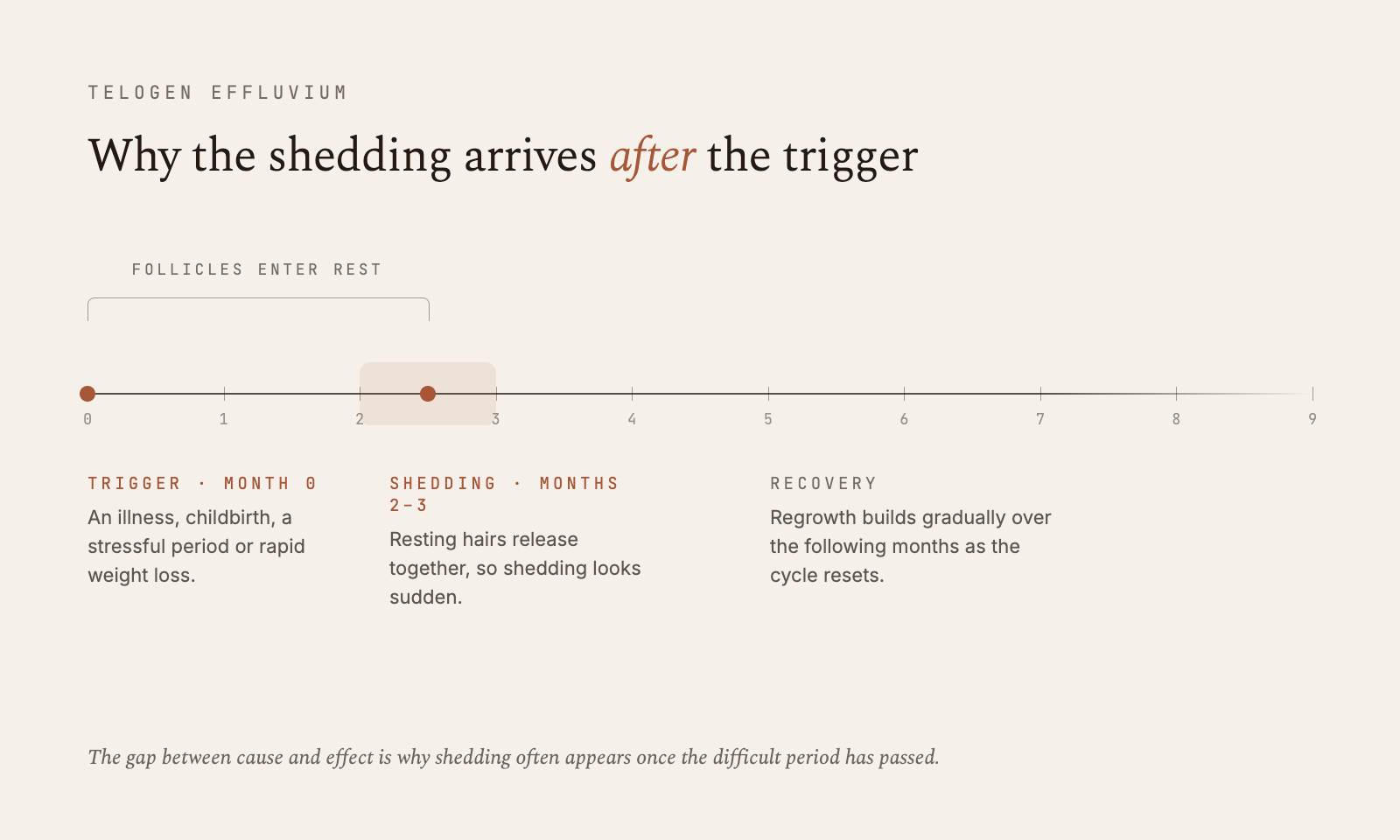
Here is the part that confuses almost everyone. When follicles are pushed into the resting phase, the hair does not fall out straight away. It sits there for roughly two to three months first, then sheds.
The trigger comes first, the shedding follows
The gap between cause and effect is exactly why so many people cannot work out what happened. By the time the hair sheds, the trigger is often forgotten.
A trigger hits
Illness, stress, surgery, childbirth or a crash diet pushes follicles to rest.
The shedding
Those rested hairs release together, often after you feel recovered.
The lag is the signature of telogen effluvium.
The common triggers
Iron deficiency and thyroid problems can also cause or worsen this kind of shedding, which is why they are worth checking with your GP if the shedding is significant.
The good news: it usually recovers
Here is the reassuring part. In most cases of telogen effluvium, once the trigger has passed, the follicles simply return to normal. They were never damaged or lost, just knocked temporarily into rest. Over the following months, they re enter the growing phase and hair regrows.
The best thing you can usually do is address the trigger where you can, look after your general health and nutrition, be gentle with your hair, and give it time. It is genuinely one of the few types of hair loss where patience is often the main treatment.
If heavy shedding continues beyond about six months, does not seem to be recovering, or you are not sure whether it is temporary shedding or the start of pattern hair loss, an assessment can tell the difference and check for ongoing triggers like low iron or thyroid issues.
Get clarity, not guesswork
A scalp scan can help distinguish temporary shedding from pattern hair loss, so you know whether to wait or act. The consultation is complimentary.
Book a complimentary consultationCrystal, Registered Nurse
Crystal is the founder of Scalp Series and a registered nurse who works exclusively in hair and scalp restoration. She holds a Graduate Diploma in Cosmetic Nursing and Injectables and a Master of Nursing Science, is currently studying toward certification as a trichologist with the International Association of Trichologists, and personally performs every assessment at the studio.
Medically reviewed before publication. Last updated July 2026.