Blood tests for hair loss: what to check and why
- Hair loss sometimes has an internal cause that a blood test can reveal and a doctor can address.
- Iron stores, shown by ferritin, are one of the most common and correctable contributors, especially in women.
- Thyroid function is worth checking, since both underactive and overactive thyroid can affect hair.
- Vitamin D and other markers may be relevant depending on your history.
- Your doctor orders and interprets these, and a normal result is useful information too.
Not all hair loss starts on the scalp. Sometimes the trigger is internal, a nutritional gap or a thyroid that has drifted, and in those cases a blood test can turn a frustrating mystery into a fixable problem. Knowing which tests are worth asking your doctor about is a genuinely useful first step.
This is general education, not medical advice, and it does not diagnose anything. Blood tests should be ordered and interpreted by your doctor, usually your GP, who will decide which are appropriate for you and what the results mean in the context of your health.
Why blood tests can matter
Hair is metabolically demanding and quietly sensitive to the body's overall state. When something internal is off, hair is often one of the first things to suffer, which is why an unexplained increase in shedding sometimes points inward. A blood test cannot diagnose pattern hair loss, but it can uncover contributing factors that, once corrected, take pressure off your hair.
Treating the scalp while ignoring a deficiency is like watering a plant in poor soil. Sometimes the fix is not on the surface at all.
The tests a doctor may consider
Iron studies and ferritin
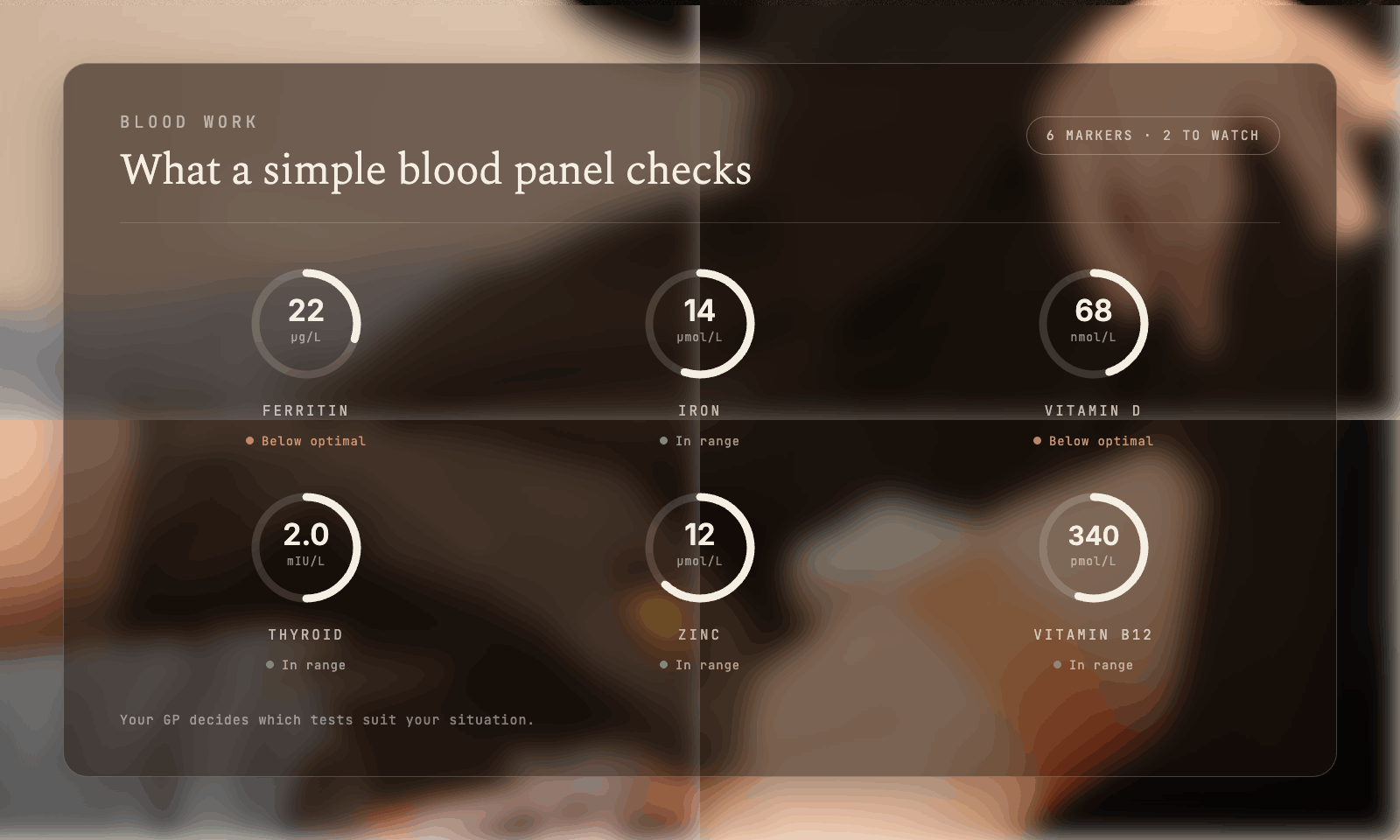
Ferritin reflects your iron stores, and low levels are a recognised contributor to hair shedding, particularly in menstruating women. It is one of the most common and most correctable factors, which is why it is so often included.
Thyroid function
Both an underactive and an overactive thyroid can disturb the hair cycle and cause diffuse shedding. Thyroid function is a sensible check when hair loss is unexplained, since it is treatable once identified.
Vitamin D
Vitamin D has roles in the hair follicle cycle, and low levels are common. Whether it is relevant to your situation is for your doctor to weigh up, but it is frequently part of the panel.
Zinc, B12 and hormonal markers
Depending on your history and symptoms, a doctor may also consider zinc, vitamin B12, and hormonal markers, especially where there are signs pointing to a hormonal cause. The right panel is individual, not one size fits all.
A scan plus the right tests gives the full picture
We assess your scalp and hair, flag what may be worth testing, and encourage you to see your doctor for bloods, so both sides of the picture work together. The consultation is complimentary.
Book a complimentary consultationWhat a normal result tells you
People are sometimes disappointed when tests come back normal, but that is genuinely useful information. A clear set of bloods effectively rules out common internal causes, which points more firmly toward a scalp based cause such as pattern hair loss, and lets you focus your effort where it will actually help rather than chasing a deficiency that is not there.
How this fits with what we do
Blood tests belong with your doctor, and scalp assessment belongs with us, and the two work best together. We look at the follicle level detail with a scan, discuss factors that may be relevant, and encourage testing through your GP where it is warranted. Then, whatever the bloods show, your plan is built on the full picture rather than half of it.
Sometimes the answer to shedding is internal, and iron stores, thyroid function and vitamin D are among the factors most worth checking. Your doctor decides which tests are appropriate and interprets them, and even a normal result is valuable, because it sharpens the focus. Pair a scalp assessment with the right bloods and you get the whole picture instead of guessing at half of it.
Crystal, Registered Nurse
Crystal is the founder of Scalp Series and a registered nurse who works exclusively in hair and scalp restoration. She holds postgraduate qualifications in cosmetic nursing, is currently studying toward certification as a trichologist with the International Association of Trichologists, and personally performs every assessment at the studio.
Reviewed before publication.