Male pattern hair loss
- It follows a recognisable path. It usually starts at the temples, the crown, or both, while the sides and back stay full.
- Genetics and DHT drive it. In men who carry the sensitivity, DHT gradually shrinks the follicles it affects.
- It is common. DermNet reports up to half of Caucasian men experience some degree of hair loss by age 50, with rates differing between populations.
- Follicles miniaturise before they stop. Treatment supports follicles that are still active, which is why acting earlier gives more to work with.
- Start with a scan, not a guess. The consultation is complimentary, and we will tell you plainly what is realistic.
If your hairline has crept back at the temples, your crown shows more scalp in photos, or your barber has started working around a thin patch, this is the most common form of hair loss in men. It is gradual, it is progressive, and the earlier it is assessed the more there is to work with.
How it usually shows up
Male pattern hair loss follows a recognisable path. It usually starts at the temples, the crown, or both at once, while the sides and back stay full. Most men notice it in the same handful of moments: a photo taken from behind, the bathroom mirror under a downlight, or a hairline that sits differently in old photos. Because it moves slowly, it is easy to explain away until the change is obvious.
Clinicians often describe the progression using the Norwood scale, a seven stage picture that runs from a full juvenile hairline through temple recession, crown thinning, and eventually the joining of the two areas. Putting a stage to what you are seeing is not about labelling you, it is about tracking it properly over time.
General research puts this among the most common conditions men face. DermNet NZ reports that up to half of men of European ancestry experience some degree of pattern hair loss by age 50, with rates varying between populations, and many notice the first changes far earlier, sometimes in their twenties. That figure is population research, not a clinic outcome, but it says something useful: if this is you, you are in very ordinary company.
Why it happens
Male pattern loss is driven by genetics and a hormone called DHT (dihydrotestosterone), a byproduct of testosterone. In men who carry the genetic sensitivity, DHT gradually shrinks follicles in the areas it affects. The follicles are not dead, they are miniaturising: each cycle produces a finer, shorter hair than the last, until some stop producing altogether. The sides and back are usually spared because those follicles are far less sensitive to DHT.
Having normal testosterone does not protect you, and high testosterone does not doom you. What matters is how sensitive your follicles are, and that is inherited, from either side of the family. For the fuller picture, including the stages it moves through, when to see your GP instead, and how the treatment options compare, read our guide to hair loss in men.
A scan and an honest read, before anything else
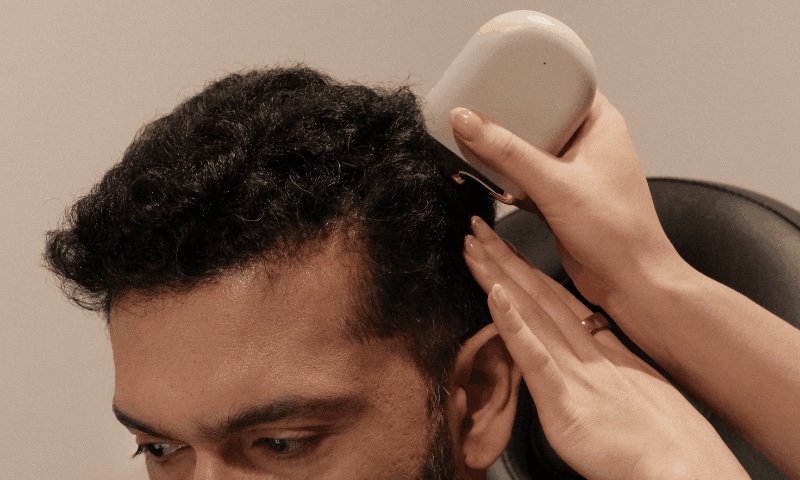
We map your scalp at the follicle level, take your history, and tell you plainly whether this looks like male pattern loss and what your options are. The consultation is complimentary.
Book a complimentary consultationWhy early assessment matters
Miniaturisation is the reason timing matters. Treatment supports the follicles that are still active, which is exactly why acting earlier gives more to work with. A follicle producing fine hair is a follicle that can still respond. One that stopped producing years ago has much less to offer. Waiting to see rarely makes the picture easier.
This is also why two men with similar looking hairlines can be in very different positions. The mirror shows density. A scan shows what the follicles underneath are actually doing.
What a consultation involves
Your first visit is unhurried and with one registered nurse throughout. We use AI scalp analysis to establish a baseline, review your history, and send you home with a written plan and honest expectations. If your pattern would suit treatment, we will explain the options, including where medication through your doctor fits alongside regenerative treatment. If it would not, we will tell you that too.
Crystal, Registered Nurse
Crystal is the founder of Scalp Series and a registered nurse who works exclusively in hair and scalp restoration. She holds a Graduate Diploma in Cosmetic Nursing and Injectables and a Master of Nursing Science, is currently studying toward certification as a trichologist with the International Association of Trichologists, and personally performs every treatment at the studio.
Male pattern hair loss, answered
Can male pattern hair loss be stopped?
Is it too late if my crown is already visible?
Do I need a referral?

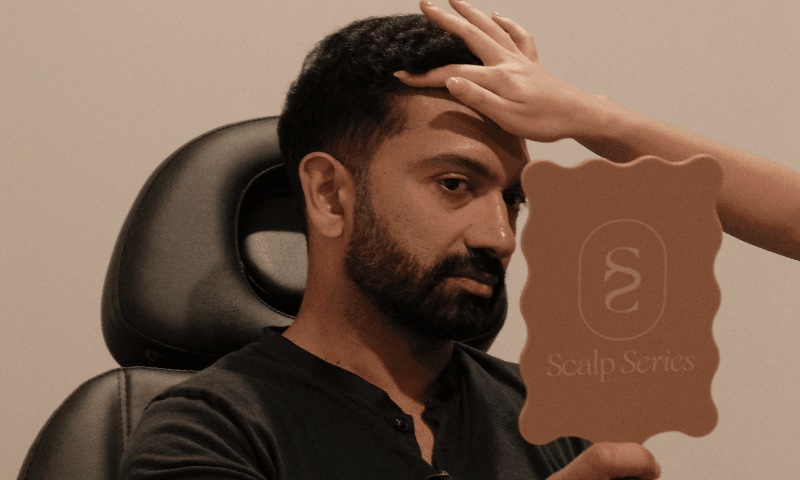
See exactly what is happening on your scalp.
A baseline scan and a calm conversation with a registered nurse will show you where you stand and what is realistic. The consultation is complimentary.
Complimentary · around 45 minutes · includes your baseline scan · no obligation
Book a complimentary consultationStudio 10, 149 Camberwell Road, Hawthorn East
Mon, Wed–Fri 10am–7pm · Sat 10am–5pm