Maturing hairline, or receding?
- A maturing hairline is normal. The low, rounded hairline of your teens settles a little higher and squarer, most commonly through the late teens and twenties.
- Receding is different. It keeps moving, and thinning follows behind the hairline rather than staying put.
- A photo shows position, not direction. Which is why a single glance in the mirror rarely settles the question.
- Measuring beats watching. AI scalp analysis measures what the follicles along your hairline are actually doing.
- A baseline answers it. The consultation is complimentary, and the scan gives you a reference point to compare against later.
Somewhere in your twenties or thirties you notice the hairline is not where it used to be, and the question arrives: is this normal settling, or the start of something? It is one of the most common questions we hear from men in the studio, and it has a proper answer.
Two different things that look similar
A maturing hairline is a normal part of getting older. The low, rounded hairline of your teens settles a little higher and squarer, most commonly through the late teens and twenties. It moves a small amount, evenly, and then it stops. It is not hair loss, and it does not need treatment.
A receding hairline is usually the front edge of male pattern hair loss. It keeps moving. The temples deepen into a more defined M shape, the hairs along the front edge become finer and wispier before they disappear, and it often travels with a second change you cannot see in the mirror: thinning at the crown.
The signs worth watching
You cannot always tell the difference in a single glance, because a photo shows position, not direction. What separates the two is movement over time and the quality of the hair at the edge. The useful questions are these. Has the hairline kept moving over the past year or two, or has it settled? Are the temples deepening rather than the whole line shifting evenly? Do the hairs at the front feel finer than the rest, like the edge is fading rather than simply sitting higher? And is there any change at the crown?
One or two quiet yeses do not confirm anything on their own. But the more of them stack up, the more it is worth measuring properly rather than watching and worrying.
A baseline settles the question
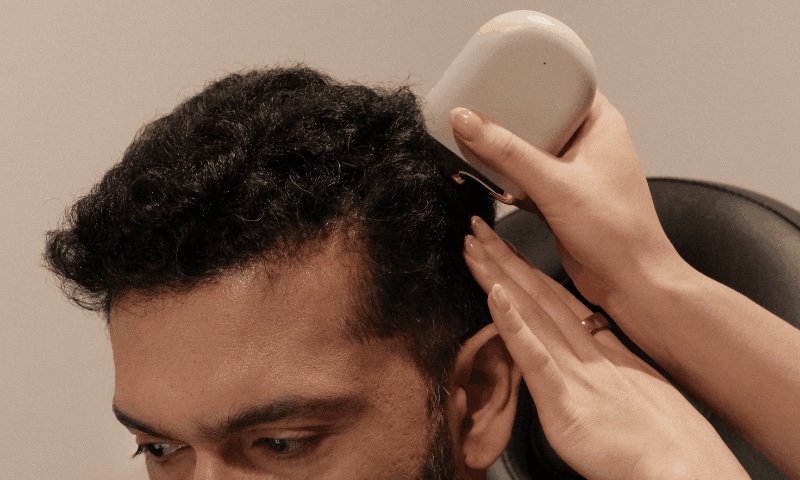
AI scalp analysis measures what the follicles along your hairline are actually doing, so the answer comes from data rather than bathroom lighting. The consultation is complimentary.
Book a complimentary consultationWhy measuring beats watching
The frustrating part of this question is that memory is a poor instrument. Lighting changes, haircuts change, and the mirror shows you a slightly different picture every day. A baseline scan takes the guesswork out: it records the state of the follicles along your hairline at follicle level, so a year from now the comparison is a measurement, not a feeling.
If the scan and your history point to a maturing hairline, that is genuinely good news and we will say so plainly. No treatment, just a baseline to check against if anything changes. If it points to early pattern loss, you have caught it at the stage where follicles are still active and there is the most to work with.
What a consultation involves
Your first visit is unhurried and with one registered nurse throughout. We use AI scalp analysis to establish a baseline, review your history and your family history, and send you home with a written plan and honest expectations. If what you are seeing is normal maturing, we will tell you that. If it is early recession that would suit treatment, we will explain the options.
Crystal, Registered Nurse
Crystal is the founder of Scalp Series and a registered nurse who works exclusively in hair and scalp restoration. She holds a Graduate Diploma in Cosmetic Nursing and Injectables and a Master of Nursing Science, is currently studying toward certification as a trichologist with the International Association of Trichologists, and personally performs every treatment at the studio.
Maturing or receding, answered
At what age does a hairline mature?
How do I know if mine is receding rather than maturing?
Should I do anything if it is just maturing?


See exactly what is happening on your scalp.
A baseline scan and a calm conversation with a registered nurse will show you where you stand and what is realistic. The consultation is complimentary.
Complimentary · around 45 minutes · includes your baseline scan · no obligation
Book a complimentary consultationStudio 10, 149 Camberwell Road, Hawthorn East
Mon, Wed–Fri 10am–7pm · Sat 10am–5pm