Dry scalp or dandruff? How to tell the difference
- They are opposites, really. Dry scalp is too little moisture. Dandruff is linked to an oilier scalp and a common yeast.
- The flakes differ. Dry scalp gives small, dry, white flakes. Dandruff gives larger, oilier, yellowish ones.
- So does the skin. Dry scalp feels tight and dry. A dandruff prone scalp can feel greasy, itchy and sometimes looks red.
- They need different care. Treating dandruff like dry skin, or the reverse, often makes it worse.
- A healthy scalp matters for hair, which is why it is worth getting right rather than guessing.
You notice flakes on your shoulders and reach for a moisturising product, or a dandruff shampoo, and hope for the best. But dry scalp and dandruff are not the same thing, and treating the wrong one can actually make the flaking worse.
The good news is they are usually fairly easy to tell apart once you know what to look for. Here is how.
Why they get confused
Both cause the same headline symptom, flakes, and often an itch. That shared surface makes them easy to mix up. But underneath, they come from opposite problems, which is exactly why the fix is different.
Dry scalp is a scalp that is too dry. Dandruff usually happens on a scalp that is a little too oily. Treating one as if it were the other is like watering a plant that is already drowning.
Which one am I looking at?
Four simple signs that usually tell dry scalp and dandruff apart. Look at the flakes, then the skin.
Dry & tight
- The flakes
- Small, white and powdery, they fall away easily
- The scalp
- Feels tight, dry, sometimes rough
- Elsewhere
- Often dry skin on the face, hands or body too
- Worse when
- Cold weather, heating, harsh shampoo, low humidity
Oily & itchy
- The flakes
- Larger, yellowish, oilier, can cling to the hair
- The scalp
- Can feel greasy and itchy, sometimes looks red
- Elsewhere
- May affect oily zones like the sides of the nose or brows
- Worse when
- Stress, hormones, infrequent washing, warm seasons
What causes each one
Dry scalp
Dry scalp is simply skin that has lost too much moisture, the same thing that happens to dry skin anywhere on your body. Cold weather, indoor heating, over washing, and harsh or stripping hair products are common culprits. The skin gets dehydrated, tightens, and sheds small dry flakes.
Dandruff
Dandruff is a bit more involved. It is a mild, very common form of something called seborrhoeic dermatitis, and it is linked to three things working together: natural oil on the scalp, faster skin turnover, and a yeast called Malassezia that lives on everyone's skin but that some scalps react to. The result is those larger, oilier, yellow tinged flakes, often with itch and redness.
Dandruff is not a sign of poor hygiene. It is an extremely common reaction involving a normal skin yeast, and washing harder or more often can sometimes irritate the scalp further rather than help.
How to care for each
Because the causes differ, so does the sensible approach.
- For a genuinely dry scalp: ease off harsh, stripping shampoos, avoid over washing, and focus on gently restoring moisture. Think hydration, not scrubbing.
- For dandruff: gentle, regular cleansing helps, and targeted anti dandruff ingredients that address the yeast and oil can settle it. Being too harsh can backfire.
- For either, if it lingers: a persistent, very itchy, red or stubborn scalp is worth having looked at properly, because a few other conditions can masquerade as simple flaking.
Let us take a proper look
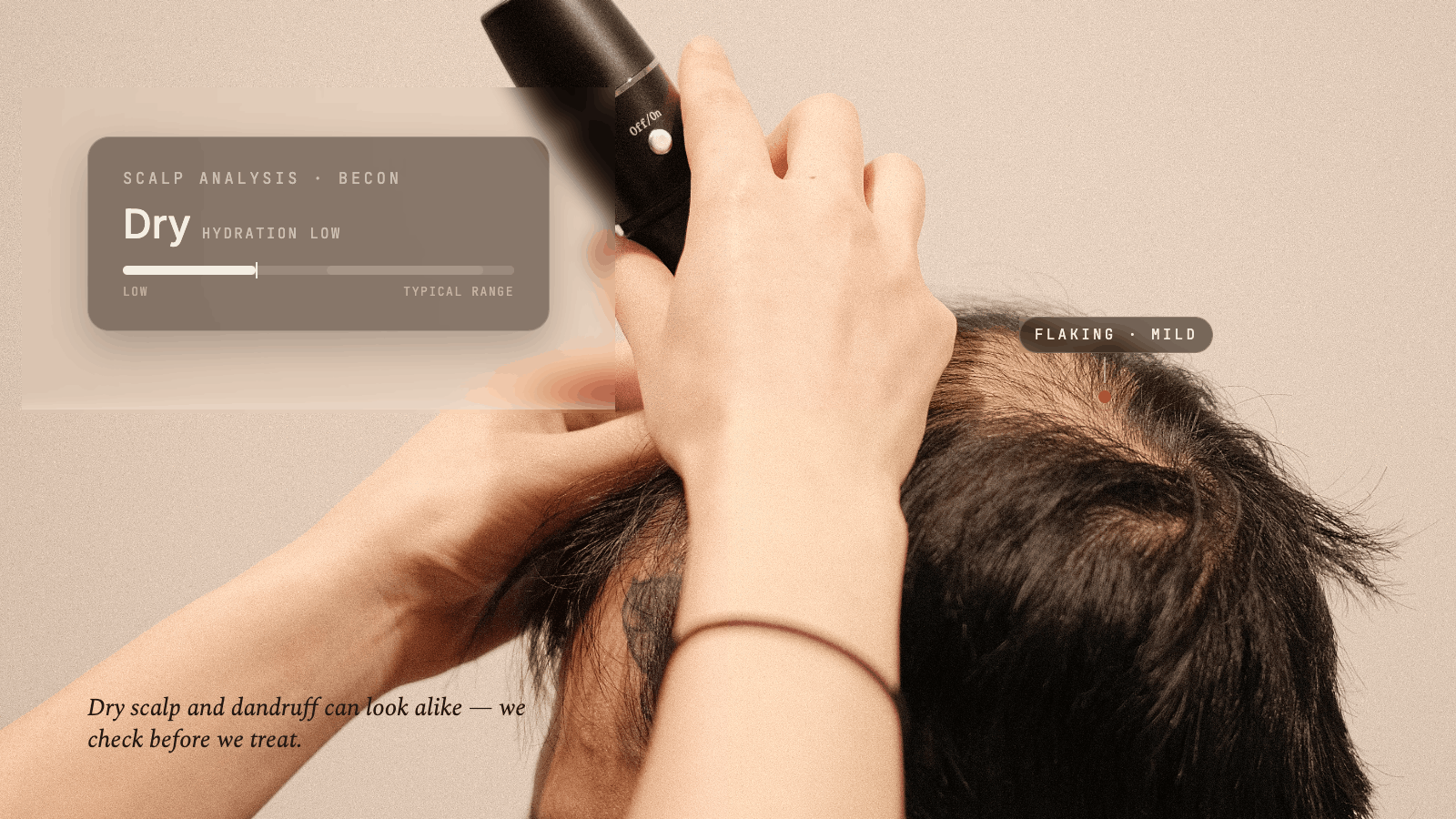
A scalp assessment can show clearly what is going on, so you stop guessing and start caring for it correctly.
Book a complimentary consultationWhy your scalp matters for your hair
Here is the part that connects this to the bigger picture. Your scalp is the soil your hair grows in. A scalp that is chronically irritated, inflamed or itchy is not the healthiest foundation for strong hair, and constant scratching does not help either.
Flaking on its own does not usually cause hair loss. But looking after your scalp is part of looking after your hair, which is why a proper scalp assessment is the starting point for everything we do. If your flaking turns out to be part of a bigger picture, it is far better to know.
Crystal, Registered Nurse
Crystal is the founder of Scalp Series and a registered nurse who works exclusively in hair and scalp restoration. She holds a Graduate Diploma in Cosmetic Nursing and Injectables and a Master of Nursing Science, is currently studying toward certification as a trichologist with the International Association of Trichologists, and personally performs every treatment at the studio.
Medically reviewed before publication. Last updated July 2026.