LED and red light therapy for hair: does it actually work?
- Yes, there is real evidence. Red light therapy can increase hair density in pattern hair loss, and it is backed by randomised trials, not just marketing.
- But it is gentle and slow. Effects are usually modest and build over many months of consistent, several times a week use.
- Device quality varies enormously, which is a big reason results are so inconsistent between people and products.
- It is a support act, not a headliner. It works best alongside a proper plan, not as a standalone fix.
- Stopping tends to undo the gains, so it is a long term commitment rather than a course.
Red light helmets, LED caps, laser combs. If you have searched hair loss online, the ads have found you. So the fair question is simple: is this real science, or expensive theatre?
The honest answer sits in the middle, and it is worth understanding properly before you spend hundreds of dollars on a device.
What it actually is
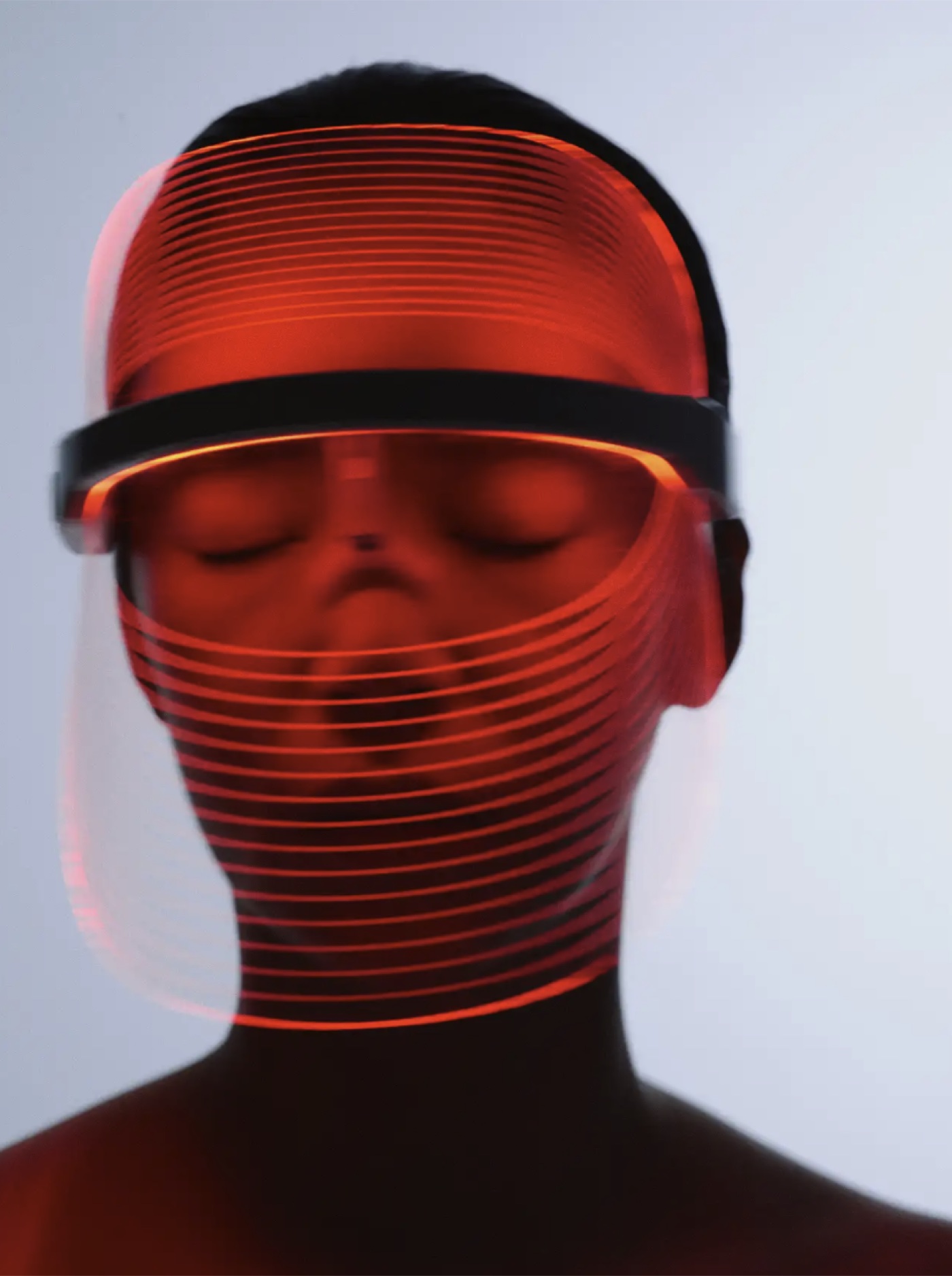
Red light therapy for hair goes by a few names: low level laser therapy, LLLT, photobiomodulation, or simply LED therapy. They all describe the same basic idea, exposing your scalp to specific wavelengths of red light, usually somewhere around 650 nanometres, for a set time, several times a week.
Unlike a hot laser that cuts or burns, this is low level light. You feel nothing. It is not heat treatment, it is light being absorbed by your cells to nudge them into activity.
Why it has to be red light
Hair devices target a specific band of red light, typically around 650 to 670 nanometres, where the light is best absorbed by the follicle cells.
How it is thought to work
The leading explanation involves the tiny power plants inside your cells, the mitochondria. Red light appears to stimulate them, boosting cellular energy and activity in the treated area.
Think of it less like fertiliser and more like turning up the lights in a workshop. It does not add new materials, it just helps the workers already there get more done.
In the scalp, the theory is that this extra energy encourages follicles to stay in, or shift back into, the active growth phase.
Light to energy to growth
Simplified, this is the chain of events researchers believe is behind the effect.
Light absorbed
Red light penetrates the scalp and is absorbed by the follicle cells.
Energy rises
Mitochondria increase energy production, lifting cellular activity.
Growth encouraged
Follicles are nudged toward, and kept in, the active growth phase.
So does it work? What the evidence says
This is where you deserve straight talk, and the good news is the evidence is more encouraging than you might expect for something so heavily advertised.
A 2019 meta analysis of randomised controlled trials found low level laser therapy significantly increased hair density compared with sham devices, in both men and women.
Liu et al., systematic review and meta analysis, 2019. Reviewers noted variation between trials.
More recent reviews have reached similar conclusions: red light therapy is a legitimate, generally well tolerated option that can improve hair density in pattern hair loss. So no, it is not theatre.
But, and this matters, the same reviewers are consistently honest about the caveats. Effects tend to be modest. Studies vary a lot in quality. And crucially, devices are wildly inconsistent, in wavelength, power, and design, which makes results hard to predict from one product to the next.
Red light therapy genuinely can help, but it tends to help a little, slowly, and only with consistent long term use. It is a sensible supporting tool, not a standalone cure, and the cheapest devices may deliver too little light to do much at all.
Where it fits alongside proper treatment
Here is how we think about it honestly. Red light therapy and in clinic treatments are not really competitors, they do different jobs.
- Red light therapy is gentle, passive and done at home. Its strength is convenience and consistency between clinic visits.
- PRP, PRF and exosomes are active, in clinic treatments that deliver growth factors and signals directly into the scalp, at a strength you cannot replicate at home.
For many people, the sensible approach is not one or the other. In clinic treatment does the heavy lifting, and a quality light device can be a useful way to support your scalp between sessions. What makes sense for you depends on your hair, your budget and your routine, which is exactly the kind of honest conversation a consultation is for.
Get an honest plan first
Before buying a device, find out what will actually move the needle for your hair. The consultation and scan are complimentary.
Book a complimentary consultationCrystal, Registered Nurse
Crystal is the founder of Scalp Series and a registered nurse who works exclusively in hair and scalp restoration. She holds a Graduate Diploma in Cosmetic Nursing and Injectables and a Master of Nursing Science, is currently studying toward certification as a trichologist with the International Association of Trichologists, and personally performs every treatment at the studio.
Medically reviewed before publication. Last updated July 2026.