Menopause and thinning hair: what changes and what you can do
- Hormones are behind it. As oestrogen falls around menopause, hair support drops and androgen influence rises.
- It usually looks like gradual thinning across the top and crown, with a widening part, rather than sudden patches.
- It is very common, and it is not a reflection of anything you have done.
- It is often treatable, especially when addressed earlier rather than waited out.
- General health matters too, so iron and thyroid are worth checking with your GP alongside any hair plan.
Menopause brings enough changes to navigate without your hair joining in. Yet for a great many women, thinning hair arrives right alongside the hot flushes and the sleepless nights, and it can knock your confidence at a time you least want it knocked.
Here is what is actually happening, and the honest picture on what can help.
Why menopause changes your hair
Your hair is quietly influenced by your hormones. Through much of adult life, oestrogen and progesterone help support hair growth and keep hair in its growing phase for longer. Around perimenopause and menopause, those hormone levels fall.
As they decline, the balance shifts. The relative influence of androgens, hormones present in all women in small amounts, becomes greater. In women who are genetically susceptible, those androgens cause hair follicles to gradually miniaturise, producing finer, shorter, weaker hairs over time. The result is thinning, most noticeably across the top of the scalp.
Oestrogen was quietly protecting your hair for years. Menopause does not attack your hair, it simply removes some of the shelter it was growing under.
The balance tips
It is not one hormone doing the damage. It is the changing balance between the hormones that support hair and the ones that work against it.
What it tends to look like
Menopausal thinning usually shows up as female pattern hair loss. That means diffuse thinning over the crown and top of the scalp, and a part line that gradually widens, while the frontal hairline is often preserved. It tends to be a slow, creeping change rather than a dramatic overnight one.
This is different from the temporary shedding some women get after a stressful event or childbirth, which usually recovers on its own. Pattern thinning does not typically bounce back by itself, which is exactly why noticing it early matters.
What can actually help
Here is the honest, encouraging part: menopausal hair thinning is often very treatable, particularly when you act while follicles are still active. There is no single fix, but there are real options.
- Medical and topical approaches. Various treatments exist and are best discussed with your doctor, who can consider your full health picture, including whether anything relates to your broader menopause management.
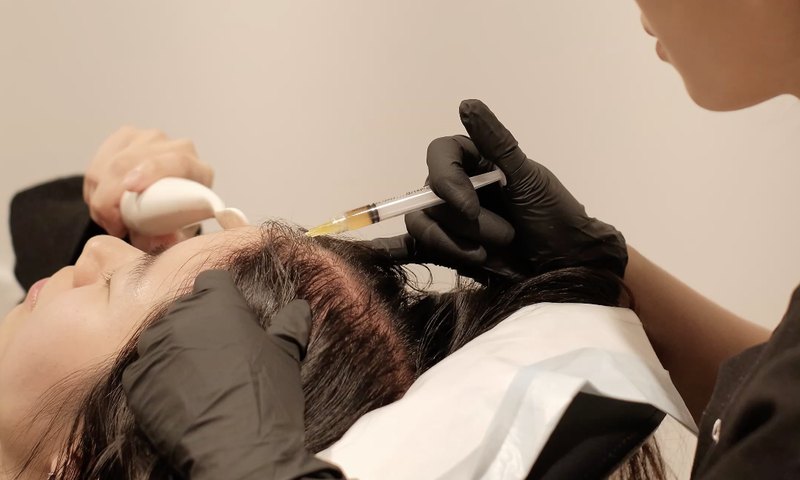
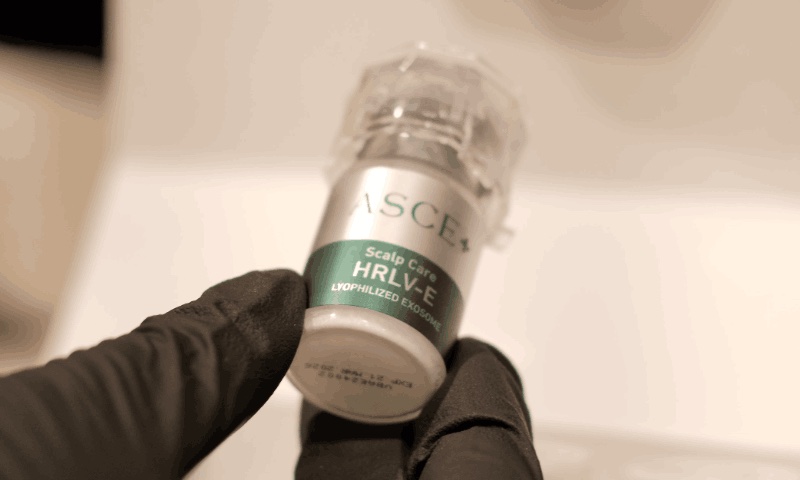
- In clinic regenerative treatment. PRP, PRF and exosome treatments work to support and strengthen the follicles you still have, which is often well suited to this kind of gradual thinning.
- The health foundations. Iron deficiency and thyroid changes become more common in midlife and can worsen hair loss, so they are genuinely worth checking with your GP.
What suits you depends entirely on your individual picture, your stage of thinning, your health, and your preferences. That is what a proper assessment is for.
Thinning hair in midlife is common and it is not a personal failing. You do not have to simply accept it as inevitable, nor do you have to chase every product online. A clear assessment tells you what is actually happening and what is genuinely worth doing.
Get a clear picture first
A scalp scan shows what is happening and what stage you are at, which guides every sensible decision. The consultation is complimentary.
Book a complimentary consultationCrystal, Registered Nurse
Crystal is the founder of Scalp Series and a registered nurse who works exclusively in hair and scalp restoration. She holds a Graduate Diploma in Cosmetic Nursing and Injectables and a Master of Nursing Science, is currently studying toward certification as a trichologist with the International Association of Trichologists, and personally performs every assessment at the studio.
Medically reviewed before publication. Last updated July 2026.