The main types of hair loss, and how to tell them apart
- Hair loss is not one condition. The type you have decides what will and will not help.
- Pattern hair loss is gradual and follows a recognisable shape. It responds best to early treatment.
- Telogen effluvium is sudden, diffuse shedding after a trigger, and usually recovers.
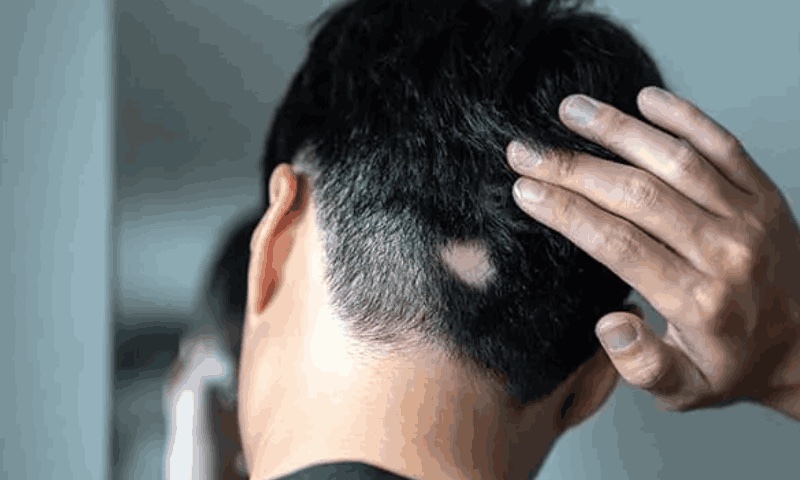
- Alopecia areata is an autoimmune condition that causes smooth, round patches.
- Scarring types are less common but need prompt medical attention to protect follicles.
- The pattern is the clue, and a scan plus your history is the reliable way to be sure.
People often say they are "losing their hair" as though it is a single problem. It is not. There are several distinct types of hair loss, they look different, they happen for different reasons, and they respond to very different things. Treating the wrong one wastes time and money, and time is the one thing that matters most with hair.
So before anything else, it is worth understanding what type you might be dealing with. Here are the main ones we see, in plain terms.
Androgenetic alopecia (pattern hair loss)
This is by far the most common type, affecting a large share of both men and women over a lifetime. It is driven by a genetic sensitivity of the follicles to hormones, which causes them to gradually shrink, a process called miniaturisation. Over years, affected hairs grow finer, shorter and weaker, until some stop producing visible hair at all.
Gradual, and it follows a shape
In men it usually shows at the temples and crown. In women it tends to be a widening part and general thinning across the top, while the hairline is often kept. It creeps in slowly over years rather than appearing overnight.
Because it is progressive, the follicles you still have are the ones worth protecting. This is the type where acting early genuinely changes how much there is to work with, which is the whole reason we encourage people not to wait and watch.
Telogen effluvium (sudden diffuse shedding)
If your hair started coming out in handfuls a few months after something significant, this is the likely culprit. Telogen effluvium happens when a shock pushes a large number of follicles into the resting phase at once. They shed together a few months later, which is why the timing feels delayed.
Sudden, all over, and usually temporary
Common triggers include childbirth, illness or high fever, surgery, crash dieting or rapid weight loss, significant stress, and certain medications. The shedding is diffuse rather than patchy, and it typically recovers once the trigger has passed and the follicles reset.
The reassuring part is that the follicles are not damaged, they are resting. We cover this one in depth in our telogen effluvium article.
Alopecia areata (patchy, autoimmune)
Alopecia areata is different again. Here the immune system mistakenly targets the follicles, causing hair to fall out in distinct, smooth, round patches, most often on the scalp but sometimes elsewhere. It can come and go, and it varies widely from a single small patch to more extensive loss.
Smooth round patches, not gradual thinning
The bald areas are usually well defined and the skin looks normal, without scaling or redness. Because it is an autoimmune condition, it is managed medically, and it is worth seeing a doctor or dermatologist for assessment.
We see clients with alopecia areata often, and the most important step is getting the right diagnosis so it is managed appropriately. Our dedicated alopecia areata guide goes further.
Scarring alopecia (less common, time sensitive)
Scarring alopecias are a group of less common conditions where inflammation destroys the follicle and replaces it with scar tissue. Once a follicle is scarred, hair cannot return there, which is why these types are time sensitive and need prompt medical attention.
With most hair loss, the follicle is struggling. With scarring types, the follicle is being lost. That difference is why speed matters.
Signs that warrant a proper medical assessment rather than a cosmetic one include redness, scaling, itching, tenderness, or patches where the skin looks smooth and shiny and the follicle openings seem to have disappeared. If that sounds like you, see a doctor or dermatologist promptly.
Others worth knowing
- Traction alopecia, caused by tight, repeated pulling from certain hairstyles or extensions. It is preventable, and often improves if the tension is removed early.
- Postpartum shedding, a very common form of telogen effluvium after having a baby, which usually settles on its own. We cover it here.
- Menopausal thinning, where hormonal change accelerates pattern hair loss in midlife. More in our menopause article.
A scan answers it far better than a mirror
An AI scalp analysis shows follicle level detail, and together with your history it points clearly to the type you are dealing with. The consultation is complimentary.
Book a complimentary consultationWhy the type matters so much
Every sensible decision about hair loss starts with knowing the type, because the answer changes completely depending on it. Pattern loss rewards early, consistent treatment. Telogen effluvium usually needs patience and addressing the trigger. Autoimmune and scarring types need medical management. And more than one can happen at once, which is exactly why guessing from an online article, including this one, is no substitute for an assessment.
If you take one thing from this, let it be that hair loss is a category, not a diagnosis. Getting the type right first is the single most useful thing you can do, because it turns a vague worry into a clear plan. A scan and an honest conversation will tell you far more than another late night search.
Crystal, Registered Nurse
Crystal is the founder of Scalp Series and a registered nurse who works exclusively in hair and scalp restoration. She holds postgraduate qualifications in cosmetic nursing, is currently studying toward certification as a trichologist with the International Association of Trichologists, and personally performs every assessment at the studio.
Reviewed before publication.